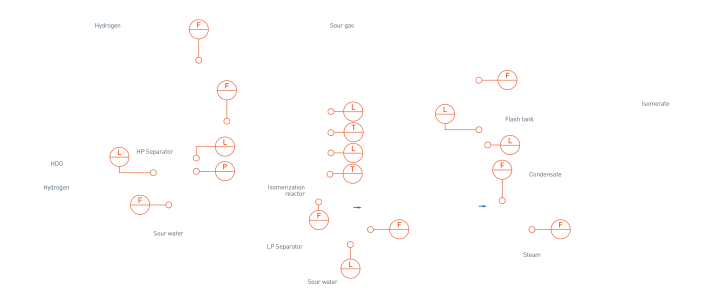


















Isomerisation – Overview
Isomerisation – High Pressure seperator
Isomerisation – Flow measurement of sour water
Isomerisation – Sour gas to amine unit
Isomerisation – High Pressure seperator
Isomerisation – Hydrogen gas injection to isomerisation reactor
Isomerisation – Outlet of isomerisation reactor to stripping columb
Isomerisation – Level control of isomerisation reactor
Isomerisation – Temperature control of Isomerisation reactor
Isomerisation – Level control of Isomerisation reactor
Isomerisation – Temperature control of Isomerisation reactor
Isomerisation – Low Pressure seperator
Isomerisation – Inlet section of Isomerisation reactor
Isomerisation – Stripping columb
Isomerisation – Sour gas to amine unit
Isomerisation – Stripping columb
Isomerisation – Hydrogen gas injection to Isomerisation reactor
Isomerisation – Fractination unit heating
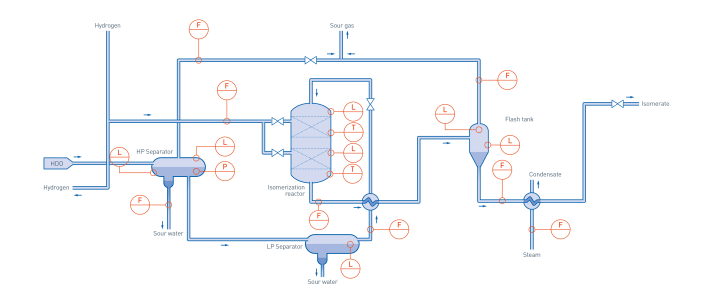
Isomerisation – Overview

Descrição

High Pressure separator

Requirements

  • Low and high level alarm
  • SIL2/3

Descrição

Flow measurement of sour water

Requirements

  • Process control

Descrição

Sour gas to amine unit

Requirements

  • Process control
  • Corrosive gas
  • separator P&T flow computer

Descrição

High Pressure separator

Requirements

  • Interface measurement oil and water
  • Extra redundancy combining mechanical level indicator and guided radar
  • SIL2/3

Descrição

High Pressure separator

Requirements

  • Pressure control in tank
  • SIL2/3

Descrição

Hydrogen gas injection to isomerisation reactor

Requirements

  • Injection of hydrogen
  • High redundancy required
  • SIL application

Descrição

Outlet of isomerisation reactor to stripping column

Requirements

  • Ultra high temperature
  • High pressure
  • 2-phase flow could occur

Descrição

Level control of isomerisation reactor

Requirements

  • No capillaries
  • Less temperature influenced
  • Electronically Differential Pressure

Descrição

Temperature control of Isomerisation reactor

Requirements

  • Temperature control of hydrogen injection
  • SIL application
  • SIL application

Descrição

Level control of Isomerisation reactor

Requirements

  • No capillaries
  • Less temperature influenced
  • Electronically Differential Pressure

Descrição

Temperature control of Isomerisation reactor

Requirements

  • Temperature control of hydrogen injection
  • SIL application
  • SIL application

Descrição

Low Pressure separator

Requirements

  • Interface measurement oil and water
  • Extra redundancy combining mechanical level indicator and guided radar
  • SIL2/3

Descrição

Inlet section of Isomerisation reactor

Requirements

  • High temperature
  • High pressure
  • High redundancy required

Descrição

Stripping column

Requirements

  • Level control of stripping column
  • Extra redundancy combining mechanical level indicator and guided radar
  • SIL2/3

Descrição

Sour gas to amine unit

Requirements

  • Process control
  • Corrosive gas
  • separator P&T flow computer

Descrição

Stripping column

Requirements

  • Low and high level alarm
  • SIL2/3

Descrição

Hydrogen gas injection to Isomerisation reactor

Requirements

  • Injection of hydrogen
  • High redundancy required
  • SIL application

Descrição

Fractionation unit heating

Requirements

  • High pressure overheated steam
  • Process control
  • separator P&T flow computer

Overview

Isomerisation in SAF Production

Hydrodeoxygenation effluent separation and hydroisomerisation to improve SAF cold-flow properties

Hydrodeoxygenation (HDO) effluent from the hydrogenation unit consists of an oil/water/gas mixture, which is separated using a high-pressure separator followed by a low-pressure separator. In these separators, water is removed as sour water. The separated gas stream consists mainly of hydrogen, with smaller amounts of CO₂ and propane, and is routed to the amine unit. There, the acid gases are removed, and the unused hydrogen is recovered and recycled back into the process.

The gas flow can be measured using either vortex or ultrasonic flowmeters, both of which are equipped with integrated pressure and temperature (P&T) compensation. This enables accurate gas flow calculation without the need for an external flow computer. The separator level can be measured using guided radar, which is available with SIL2 certification. For additional redundancy, the guided radar can be combined with a mechanical level gauge such as the BM26-8000, providing a mechanical backup to the electronic measurement.

The purpose of the isomerisation reactor is to reduce the cloud point of the HDO feed to a level that meets aviation fuel specifications. Similar to the hydrogenation stage, hydrogen is injected and the reaction is exothermic. The reactor operates under high temperatures and pressures and utilises a similar instrumentation setup to the hydrogenation reactor.

The isomerate is routed to a flash tank or stripping column, where remaining gases and unused hydrogen are removed. The level of the flash drum can be measured using guided radar installed in a bypass chamber. For additional redundancy, the radar measurement can be combined with a mechanical level gauge, providing a reliable backup level indication.