Wind power in the sustainable energies industry
Clean energy generation with wind power
Corrosion‑resistant sensor and converter options
Flowmeters suitable for strong electromagnetic fields
Instruments built to withstand extreme weather conditions
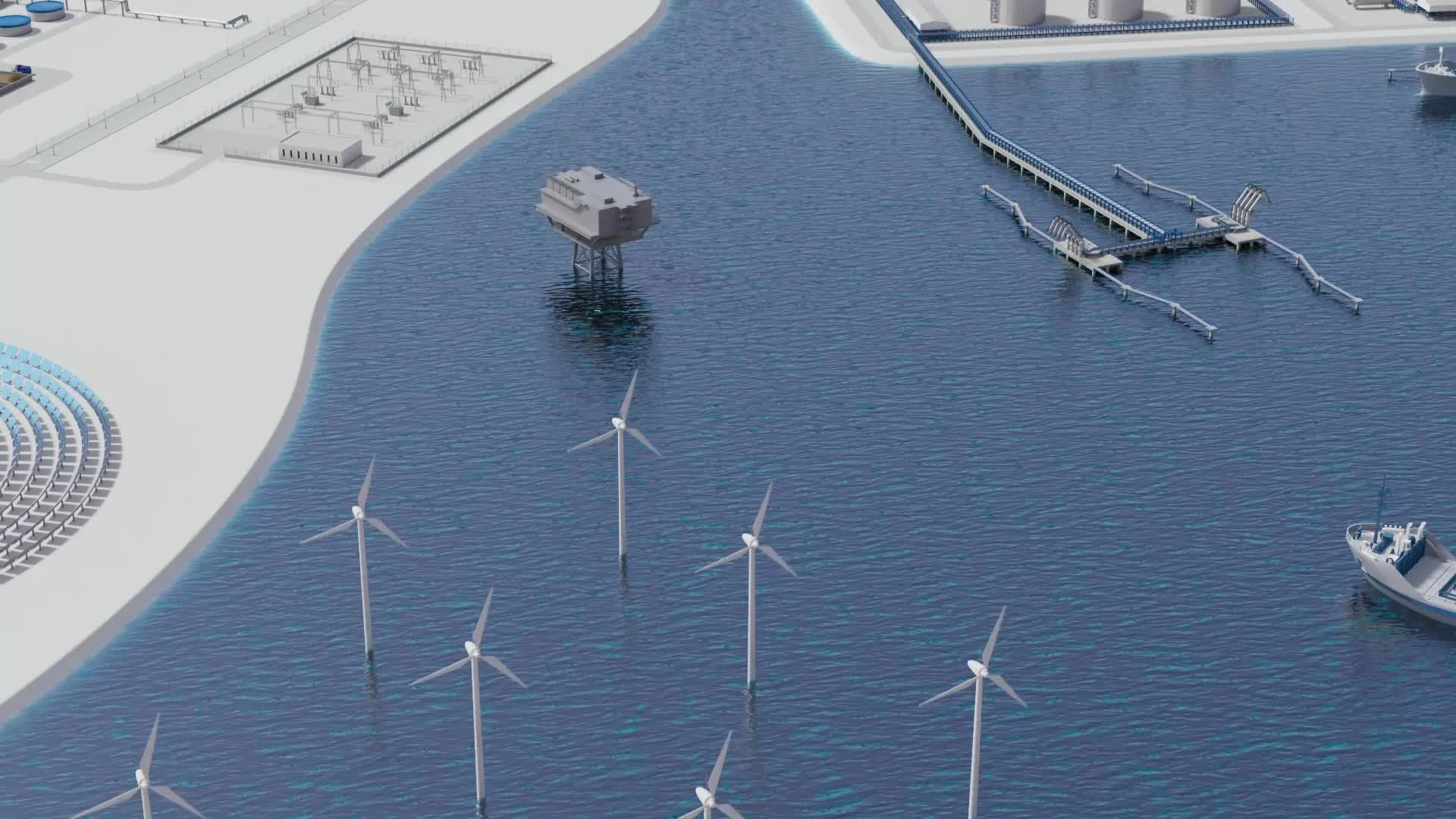
Offshore wind power has become one of the most promising pillars of modern renewable energy. Positioned far out at sea, these installations make use of the strong and steady coastal winds to generate large volumes of clean electricity. As nations work towards reducing carbon emissions and increasing energy security, offshore wind farms play a crucial role in driving the transition to a more sustainable energy future.
To bring this energy ashore, the produced electricity is consolidated and converted at offshore substations, where transformers and rectifiers prepare the power for transmission via High Voltage Direct Current (HVDC) systems. These critical components require reliable cooling—often using seawater—and robust instrumentation capable of withstanding harsh marine environments, including saltwater corrosion, temperature fluctuations and strong electromagnetic fields.
KROHNE supports the long-term efficiency and reliability of offshore wind power with measurement technology specifically engineered for these demanding conditions. Our corrosion‑resistant, high‑durability sensors provide precise and stable measurements, even under constant vibration, electrical interference and severe weather exposure.
KROHNE Global Industry Division Sustainable energies
Headquartered in Duisburg, Germany, our Global Industry Division is dedicated to serving customers in the sustainable power generation and sustainable energy sectors. Our offering extends from elementary process instrumentation up to fully engineered systems, and from engineering consultancy during the design phase, through to on-site commissioning and training. With presence in around 100 countries, local support is usually available from just around the corner. This applies whether the application can be covered by standard instrumentation, or is more challenging, where a one-off solution with dedicated process diagnostics is required.
